Specialist damp investigation & treatment
Victorian and traditional buildings: understanding the cause before treating the problem.
Damp in Victorian and traditional properties: find the cause, not just the symptoms
Victorian and older properties were often built with solid walls, traditional lime mortar and suspended timber ground floors, with ventilation beneath the floorboards. These buildings were constructed differently from modern houses and need to be understood and treated accordingly.
Traditional masonry can absorb and release moisture naturally. Many damp problems develop when something interferes with this process, preventing the building from drying properly.
Damp is often a symptom of an underlying problem. Moisture may be entering faster than the building can release it. Common causes include raised external ground levels, blocked or buried air bricks, restricted subfloor ventilation, defective pointing or render, leaking gutters and accumulated debris beneath suspended floors.
Too often, homeowners are advised to have chemical damp-proof injection and impermeable replastering before the actual cause has been properly established. In some traditional solid-wall properties, inappropriate treatments can restrict drying and leave the underlying moisture problem unresolved.
Our approach is different. We investigate the building, identify the source of moisture and explain what we find. We then recommend appropriate repairs to address the underlying problem before dealing with any resulting internal damage.
We don’t sell chemical damp-proof injection treatments. Our focus is on understanding traditional construction and putting the actual problem right.
“Lee and his team have done a great job on the improvements and repairs needed on a newly purchased Victorian end terrace house. We had damp problems in living and dining rooms, caused by high external ground levels. After having a number of building companies recommending damp injection solutions, Lee was the only one to get to the root cause of the problem. The company did a great job with external drainage and internal waterproofing and re-plastering. Did such a good job also put down a new engineered wood floor for us. Although not the cheapest initial quote, we feel the work is well worth it.”
What this covers
- Damp traced to its cause, outside first (guide)
- Suspended timber floors: joists, voids and ventilation
- Blocked and buried air bricks cleared or added
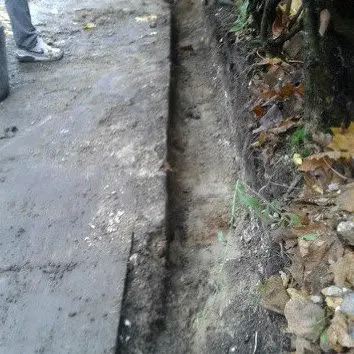
- Ground and paving levels lowered, French drains
- Failed pointing redone in the right mortar (guide)
- Why injection is often the wrong fix (guide)
Underlined items open a short guide or the related service.
What we look for
The causes we find most often in Victorian and Edwardian houses. Most can be seen from outside, or with a couple of floorboards up.
Ground and paving raised against the wall
Patios, paths and flowerbeds built up over the years until they sit at or above the damp-proof course, or above the floor inside. Rain splashes and soaks straight into the brickwork. The ground should sit at least 150mm below the damp-proof course.
Blocked or buried air bricks
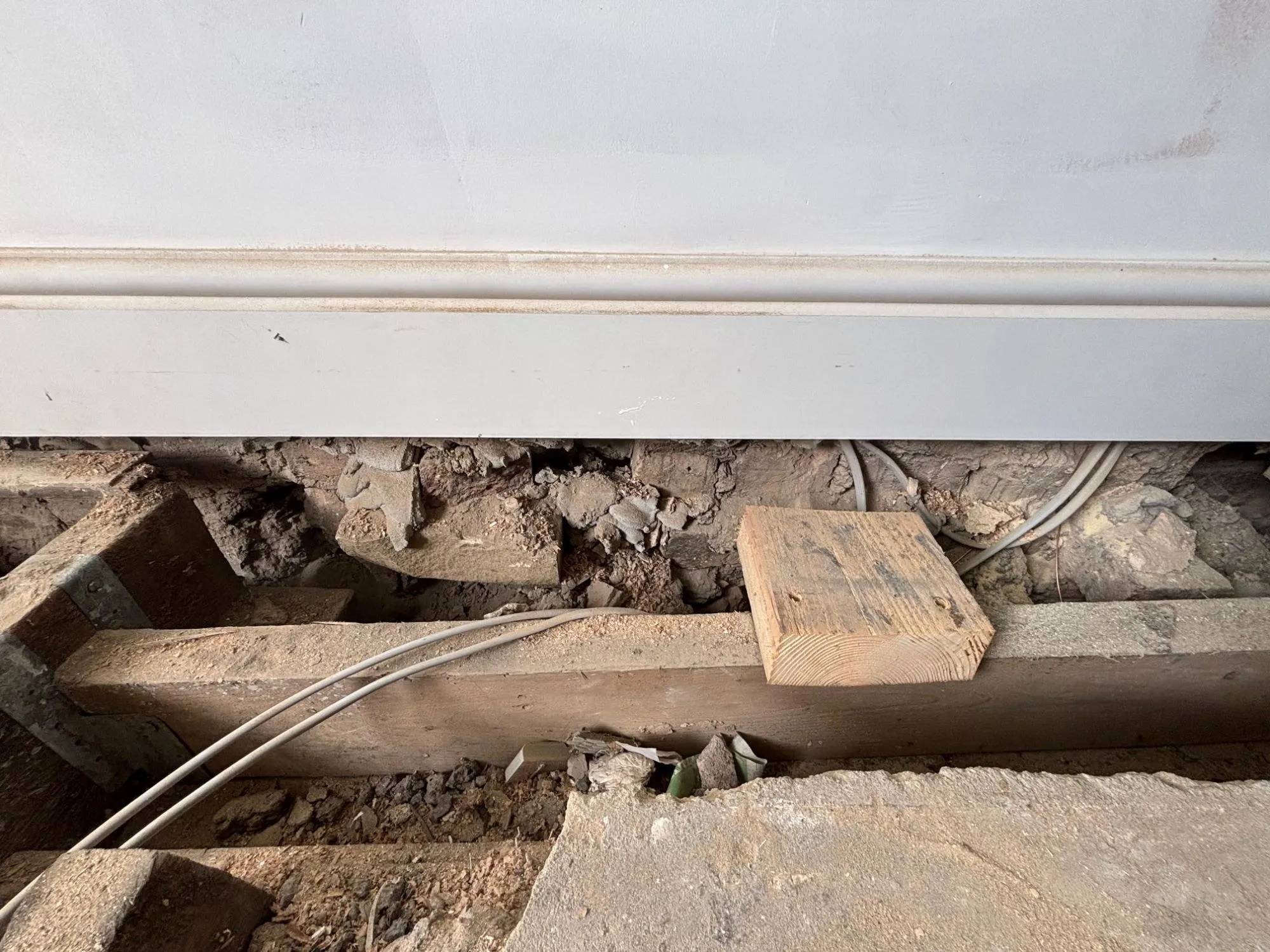
Air bricks keep the space under a suspended timber floor dry. Paved over, painted, filled with rubble or covered by a later extension, the void gets damp and the joists start to rot.
Debris under the floor
Builders’ rubble, old hearth bases and soil left in the floor void, bridging the damp-proof course or stopping air from moving under the floor.
Rotten joists and wall plates
Timbers resting on or built into damp brickwork rot from the ends. A soft or springy floor near an outside wall is often the first sign.
Failed or unsuitable pointing
Missing pointing lets rain straight in. Pointing in a mortar too hard for the brick can trap water instead, and the brick faces start to crumble.
Damaged render plinths
A cracked render plinth along the bottom of the wall lets water in behind it and then stops it drying out. It often hides or bridges the damp-proof course too.
Gutters, downpipes and drains
A leaking joint, a cracked downpipe or a blocked gully soaking the same patch of wall every time it rains.
Condensation
Not water getting in at all, but moisture from inside the house: mould in corners and behind furniture, worse in winter. Better ventilation and heating fix it, not building work, and we’ll tell you so.
How the project runs
From the first look outside to the repairs, in the order we do it.
- Outside firstGround and paving levels against the wall, gutters, downpipes and drains, render plinths and the state of the pointing.
- Air bricks and the floorAir bricks checked for blockages, and floorboards lifted where needed to look at the joists, the wall plates and any debris stopping air moving under the floor.
- InsideWhere the damp shows, its pattern and its height, and whether any of it is condensation rather than water getting in.
- The cause, in writingWhat is causing it, what to fix first and what can wait, itemised so you can see what each part costs.
- Fix the causeGround levels lowered, French drains installed, air bricks cleared or added, gutters and downpipes repaired, and defective pointing and render put right in lime or cement mortar to suit the wall.
- Then the repairsRotten joists and timbers replaced and walls given time to dry before they are replastered in materials that let them breathe.
Customers on projects like this
Word for word from Which? Trusted Traders, each one linked to the original. 6 of our 34 reviews are about this kind of work.
We are safer and warmer thanks to these Victorian house experts!
“We bought our first house and got a full structural survey and a structural engineering survey. We needed to fix up slipped tiles on the roof and strengthen the side extension roof that would both need scaffolding, so we wanted to fix as many issues at once as possible. We made a long list from both surveys and asked LR Building to take a look. Lee took us seriously and read through our list, making several site visits before making an itemized quotation, including clearly warning the roof quotation could not be firm until scaffolding was up. On-site, the LR Building team led by Gary were courteous and friendly, tidy and professional, and completed all work to a high standard. As ever, more issues were discovered including a blocked underground drain and ceiling insulation used in a vertical wall, and they explained and quoted for the new work each time. They replaced our guttering; installed missing stinkpipes; created a new french drain at the front; rerouted our gas pipe; redid nearly _all_ our exterior pointing; moved our garden gate; added missing roof valleys and major roof ridge improvements; replastered our kitchen ceiling with fire-safe material; moved air-bricks; and sealed major gaps in our brickwork where draughts were coming in. We feel so much warmer and safer as a result of LR Building's work! The eventual cost rose by £8k over the initial quotation, which was very reasonable given the new work discovered for the roof, walls and drains.”
Customer in Greater London, roof, pointing, drains and gutters on a first house · Which? Trusted Traders · 29 Sep 2024 · Read it on Which?
French drain
“I needed a French drain putting in on 3 sides of my house, prior to insulation work. Lee was prompt to come round for a look and to give a quote. His team then carried out the work over the next 2 weeks and did a very nice job for me. They were considerate - arriving when they said they would and telling me if they were going to be slightly delayed. In a nutshell: a good job, and good communication throughout, very professional. I would unhesitatingly recommend them and use them again.”
Customer in Kent, French drain on three sides of a house · Which? Trusted Traders · 9 Dec 2022 · Read it on Which?
Excellent work all round
“Lee's team have done excellent work on our house. After having a Damp Survey carried out, Lee came round and assessed the work to be carried out. A further visit with Lee's foreman was arranged. The work mainly involved uncovering the damp course, due to the ground being too high outside of the kitchen. Lee's team were friendly, very hard-working and always left things clean and tidy at the end of the day. They happily answered any questions we had and were always helpful. They stayed in contact via phone to keep us informed of arrival times while checking this was convenient. An excellent team. Job well done!”
Andy Gowdey, damp course uncovered, ground levels lowered · Which? Trusted Traders · 6 Jun 2018 · Read it on Which?
Good professional service
“We had a growing problem with a damp outside wall, caused by failing guttering. We also had a concern about a gap under the slab foundation. Lee responded quickly to our call and immediately provided a diagnosis. The gap under the slab was only the route of a soak away pipe, but Lee recommended we dig out a little to take the soil further below the damp course and level the ground out - which I did myself. He recommended replacing some of the guttering - which we knew needed doing - but he didn't ever try to suggest that all of it needed doing (as some builders might!). The job was done quickly and effectively. We'd definitely use them again.”
Alastair King, damp wall and failing guttering · Which? Trusted Traders · 4 Oct 2017 · Read it on Which?
Guides on this work
Damp caused by high ground levels outside
A great deal of damp in older houses starts outside, at the foot of the wall. Before anyone injects anything, look at what has happened to the ground around the house.
DampDamp-proof injection in old houses: is it the right fix?
If you own an older house with damp walls, someone will probably suggest injecting a chemical damp-proof course. Sometimes it has a place. Often the damp has a different cause, and the injection does not fix it.
Questions
Do I need a damp-proof course injected?
Often not in an older house. Many damp problems in solid-walled houses come from outside, such as raised ground levels, blocked air bricks or leaking gutters. We find the cause first and only recommend what the house actually needs.
Is it rising damp?
Sometimes, but far less often than people are told. In an old house, damp at the bottom of a wall is usually from raised ground levels, a bridged damp-proof course, a leak or condensation. We’ll tell you which, and show you why.
Should the wall be tanked or rendered in cement inside?
Not usually, above ground in an old solid-walled house. Waterproof render and tanking can hold moisture in the wall and push it sideways or upwards. Once the wall has dried we replaster in a material that suits it, usually lime or another breathable plaster.
How long does a wall take to dry out?
Longer than most people expect. Once the cause is fixed a thick solid wall can take months to dry, so we don’t rush the replastering. The old rule of thumb is about a month for every inch of wall.
Can you look at damp in a house I am buying?
Yes. Our cost report for buyers prices every item on your surveyor’s report, including any damp, so you know what you are taking on before you exchange. Cost reports for buyers →
Other services
Brick & stone
Roofs & damp
Get a quote for damp investigation & treatment
Describe the project and where it is. We’ll reply to arrange a visit, then send an itemised written quote.
- We reply within 2 working days
- We visit and look at the project properly
- You get an itemised, provisional quotation
Rather talk it through? Call or WhatsApp Lee on 07875 545032.
Photos help. Send them from the contact page or reply to our email with them.
Thanks, your enquiry is with us
We’ll reply within 2 working days.