In short
- London stocks were the main building brick of London and the south-east until the early twentieth century.
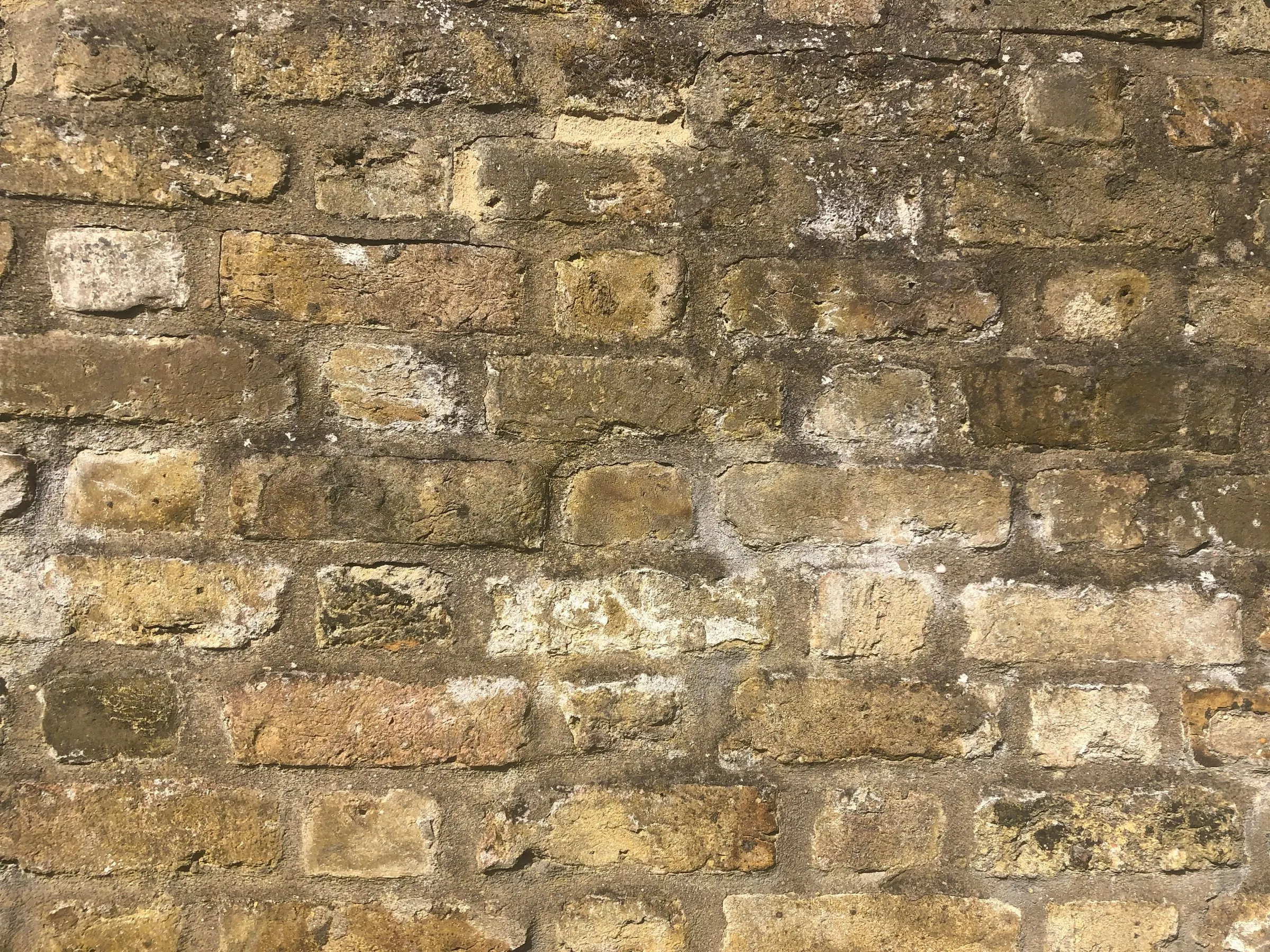
- Their yellow colour comes from chalk in the clay mix, and the dark flecks from ash burned in the firing.
- They are soft and porous, so they belong with lime mortar, not hard cement.
- Repairs are usually matched with reclaimed stocks, chosen for colour, size and texture.
What is a London stock brick?
A London stock is a handmade brick that was dug, moulded and clamp-fired in the brickfields around London. It was the standard building brick for most of London and the south-east until machine-made bricks, such as Flettons, took over in the early twentieth century.
The clay was mostly brickearth, a fine wind-blown deposit. Chalk was added to make it workable, and sifted household ash went in as well. The ash burned inside the brick during firing, which saved fuel and left the dark flecks and small pits you see on many stocks.
Why are London stocks yellow?
The chalk in the mix turns the fired brick yellow rather than red. New stocks are a fairly bright yellow. After a century or more of London air and weather, most have darkened to the brown, grey and smoky tones you see on terraces today.
Colour varied from batch to batch and with position in the clamp, so an original wall has a natural mix of shades. That is part of what makes it hard to match with a single new brick.
Soft, porous and irregular
Handmade stocks are softer and more porous than modern machine-made bricks. They take in moisture and give it back, which is why they were laid in lime mortar. Pointed in hard cement, they tend to lose their faces.
They also vary. Some have a frog, the shallow indent pressed into one bed face, and some have none. Sizes differ between makers and periods, and old bricks were not made to the modern metric size. When choosing reclaimed bricks to match, size matters as much as colour, because a brick that is slightly too tall or too short will throw out the coursing.
Why reclaimed stocks are used to match
Reclaimed London stocks come from demolished buildings. Because they were laid in lime, the old mortar usually cleans off without damaging them. They have already weathered, so a repair or a rebuilt section blends in from day one rather than standing out for years.
Reclaimed stocks need sorting. Some will be underfired, cracked or too soft for an exposed position, and some yards sell new bricks distressed to look old. We pick bricks for the project, check them against the existing wall, and lay them in a lime mortar matched to the original.
Where reclaimed bricks cannot be found in the quantity needed, new handmade stocks are still produced in small numbers for repair work.