In short
- Weather-struck and cut pointing sheds water well and suits many exposed walls.
- Flush pointing is often the most sympathetic finish for older, softer or worn bricks.
- Recessed joints look sharp but hold water, so they only suit frost-resistant bricks.
- The best guide on an old house is the original pointing: copy it where you can.
Weather-struck and cut pointing
The mortar slopes outwards from just under the brick above to the face of the brick below, so water runs off rather than sitting on the top edge of a brick. The bottom edge is cut clean with a trowel and straight edge.
It is a practical choice for walls that take driving rain, and it gives a crisp, neat line. On very worn or irregular old bricks it can look too sharp, and the sloping joint can leave the eroded edge of a brick exposed.
Flush pointing
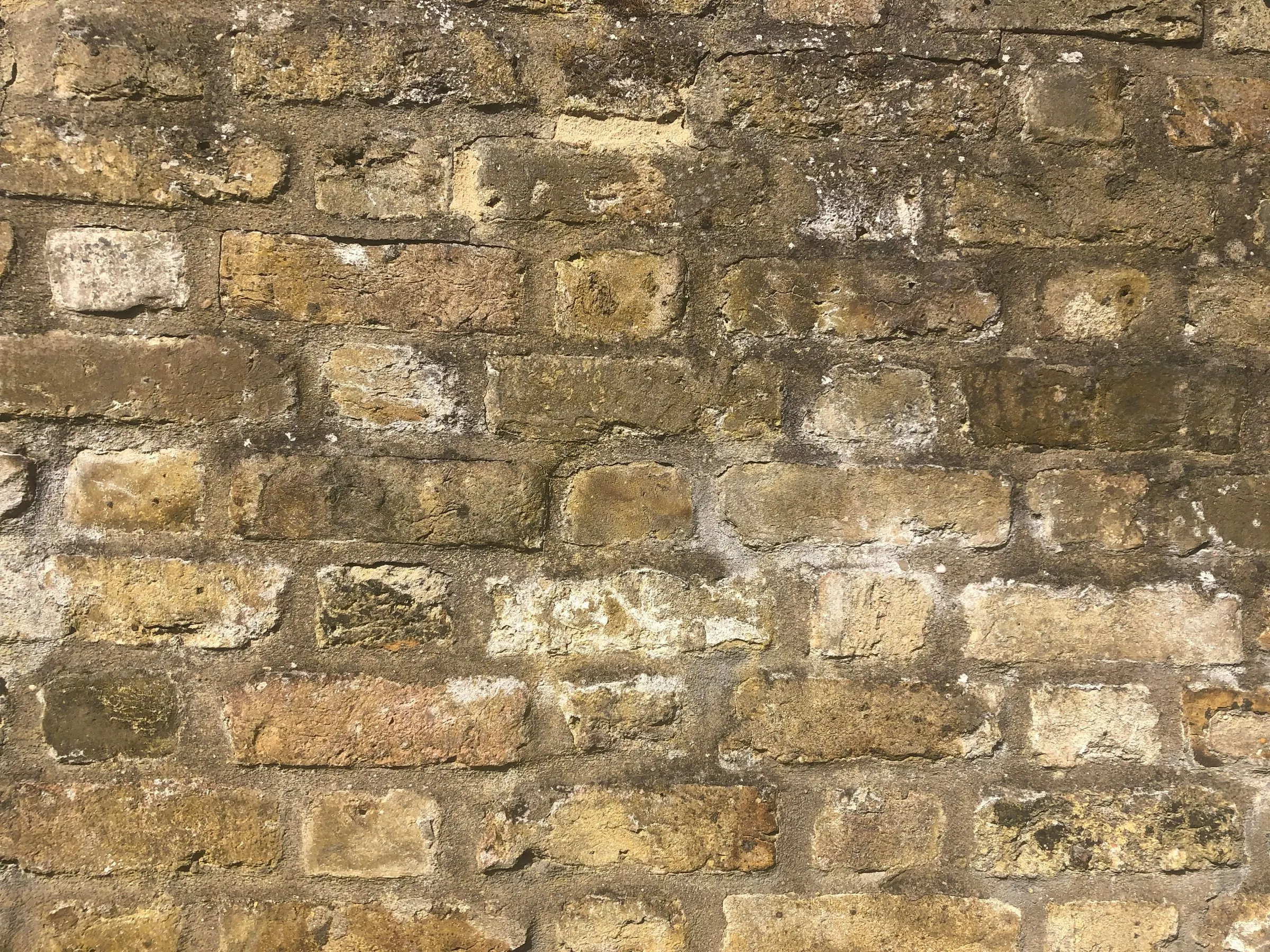
The mortar is filled and pressed in level with the face of the bricks, then trimmed neat. It sheds water well and covers the edges of worn or rounded bricks, which protects them.
Conservation bodies, including the SPAB, often favour a flush or nearly flush joint on older buildings. On a period house with soft or eroded bricks it is frequently the safest finish.
Bucket handle or concave pointing
The joint is filled as for flush pointing, then run with a rounded tool to leave a shallow curve. The tooling compacts the surface of the mortar and it sheds water reasonably well.
It is one of the most common finishes on houses of the twentieth century onwards. It suits regular, sharp-edged bricks better than very worn ones.
Recessed pointing
The mortar is pressed back a few millimetres from the brick face, leaving a shadow line that makes each brick stand out. It looks smart on modern buildings, but the top edge of every brick is left exposed and water sits on it.
Recessed joints are generally not suitable for exposed walls and should only be used with bricks that have excellent frost resistance. On soft period bricks they are best avoided.
Tuck pointing
A decorative finish found on many Georgian and Victorian London fronts. The joints are filled flush with a mortar coloured to match the bricks, then a fine ribbon of lime putty is applied along the centre of each joint to give the look of very thin, straight joints. It is skilled work and is always done in lime.
How to choose
On an older house, start with whatever survives of the original pointing. Look in sheltered spots, under sills and in corners, where it is least weathered. Matching it keeps the character of the house, and the original builders usually chose a joint that worked for that brick.
Then think about exposure. A gable end facing the prevailing weather needs a joint that throws water off. A sheltered garden wall gives more choice. We will recommend a finish when we visit, and can do a small sample area so you can see it before the whole wall is done.