In short
- Full plans: drawings are checked and approved before work starts. The council should decide within five weeks, or two months if you agree.
- Building notice: no plans approval in advance. Work can start two days after the notice is given, and is checked by inspection as it goes.
- Either way, building control inspects the work and issues a completion certificate when it complies.
- We can run the whole process for you, or point you to the forms and leave you to book the inspections.
What is a full plans application?
You send building control detailed drawings and, for structural work, the engineer’s calculations. They check them against the building regulations and approve them, approve them with conditions, or reject them. GOV.UK says to expect a decision within five weeks, or two months if you agree to the longer period.
It is the most thorough route. You know the design is acceptable before work starts, which suits larger projects such as extensions and loft conversions.
What is a building notice?
A building notice tells the council what you are going to do, without detailed plans being approved first. GOV.UK describes it as a route for smaller projects. Work can begin two days after the notice is given, and compliance is checked on site through inspections.
The council can still ask for drawings or calculations, and for structural work it normally will. The risk is that if an inspector finds something that doesn’t comply, it has to be put right, because nothing was approved in advance. A building notice expires if the work has not started within three years.
It is not available for every project. The regulations require full plans for some buildings, including non-domestic buildings covered by fire safety law and new buildings fronting a private street. Your council can tell you which route it expects.
Which route suits a chimney breast or knock-through?
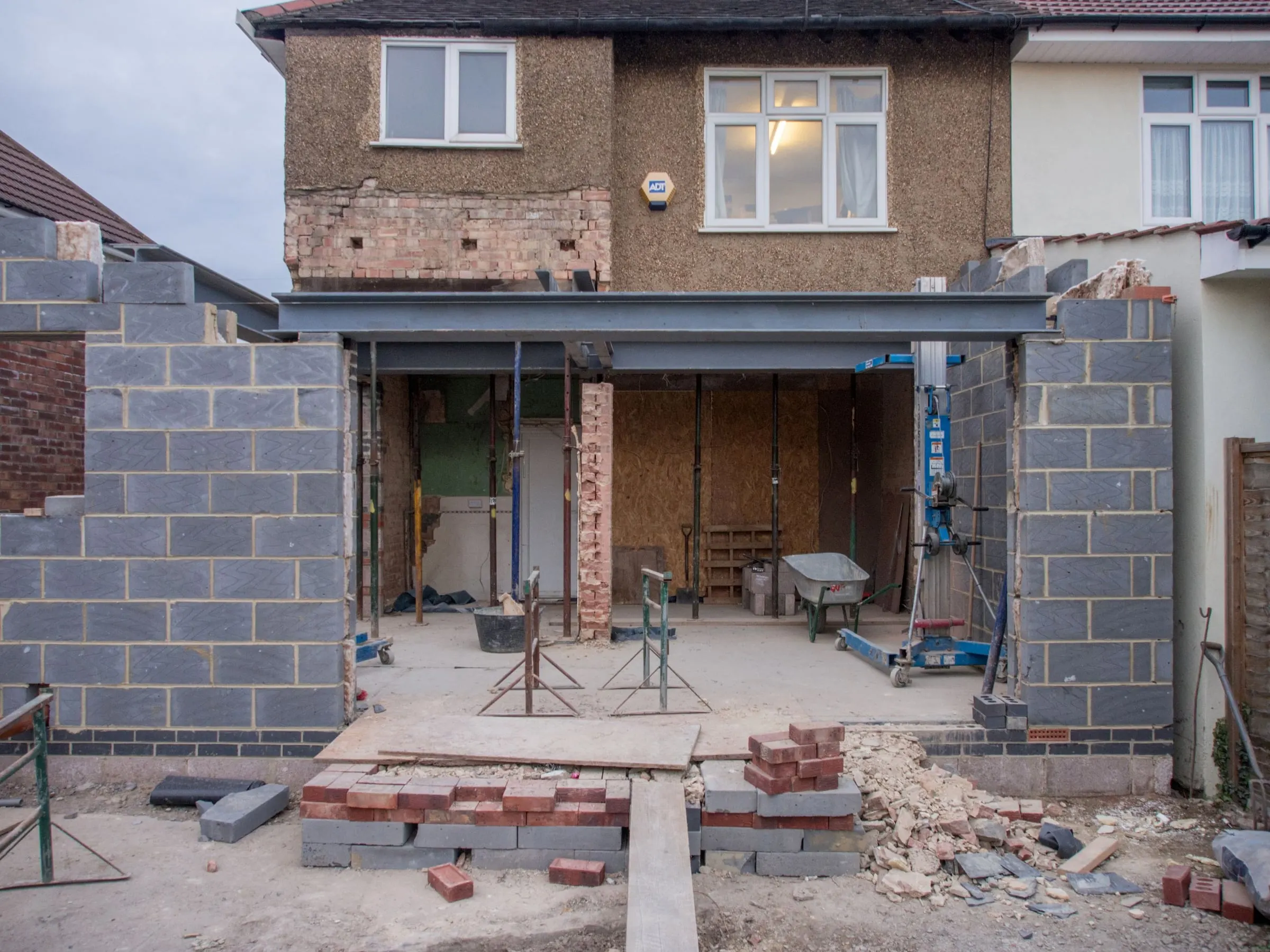
For a straightforward chimney breast removal or a single opening in a wall, a building notice with the engineer’s calculations and drawing is the common route. It is quicker to get started. For bigger alterations, or where you want the design signed off before you commit, full plans gives more certainty.
Whichever route you use, notify building control when work starts and again when it is finished. The regulations require a commencement notice at least two days before starting and a completion notice within five days of finishing.
Option A: we take control of building control
We prepare and submit the application with the engineer’s calculations and drawing, and call building control out for each inspection until the work is signed off. We charge a service fee for this. You pay the council’s own fees directly.
You don’t have to learn the system or track which stage needs an inspection.
Option B: you deal with building control yourself
You give the council a building notice yourself. We point you to the right forms, give you the engineer’s paperwork to send with it, and prompt you when an inspection is due. You are then responsible for booking those inspections with the council.
This saves our service fee, but if an inspection is missed, work may have to be opened up so it can be seen, and the completion certificate can be delayed.
Getting the completion certificate
When the final inspection is passed, the council issues a completion certificate. Keep it with the deeds. A buyer’s solicitor will ask for it, and GOV.UK warns that without approval you may not have the certificates you need when you sell.
If structural work was done in the past without approval, the council can sometimes issue a regularisation certificate after inspecting it. Only local authority building control can do this.